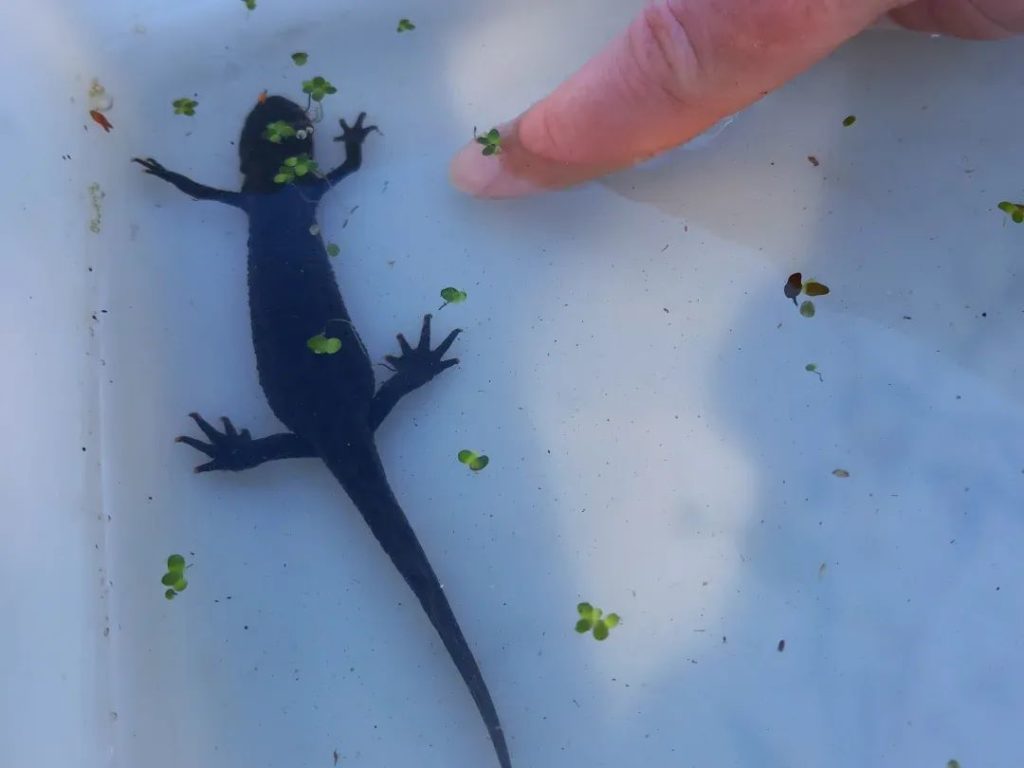
We recently completed our annual survey of great crested newts at Berrow Dunes Local Nature Reserve and are pleased to report healthy numbers across the site. These remarkable amphibians are protected at a European level, making the UK’s populations of international importance.
For most of the year, great crested newts live on land in habitats such as woodland, hedgerows and rough grassland, where they feed on insects and other invertebrates. In early spring, they return to ponds to breed. At this time, males develop a distinctive wavy crest and perform elaborate courtship displays, while females lay up to 200–300 eggs, carefully wrapping each one in vegetation for protection. They are our largest native newt, growing up to 17cm long.
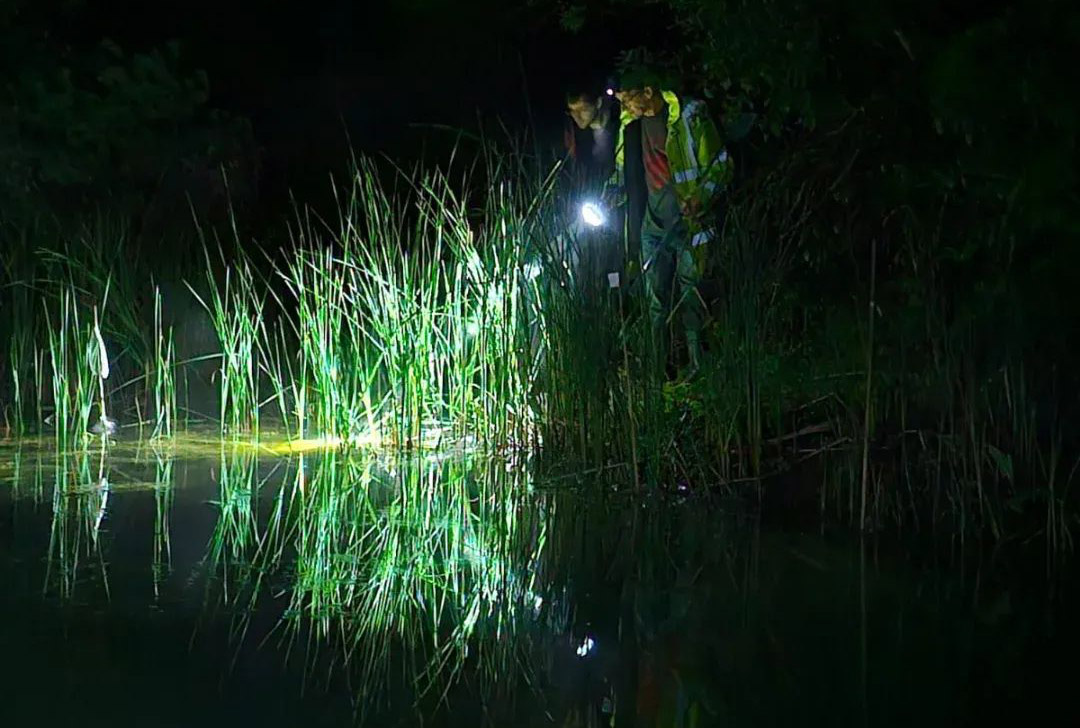
Our survey involves six evening visits using torchlight and bottle traps, followed by early morning checks to safely release any captured newts. This year, we recorded a peak count of over 40 individuals in a single evening, indicating a healthy, medium-sized population. The surveys are carried out with the help of licensed ecologists, who generously volunteer their time.
Over the winter, we have also been improving pond habitats to benefit newts and other wildlife. Clearing back overhanging vegetation allows more sunlight to reach the water and reduces leaf litter, helping to maintain good water quality.
Visitors can play an important role in protecting these habitats. We ask that dogs are kept out of ponds, particularly if they have recently been treated for fleas or ticks. Some common treatments contain chemicals that are highly toxic to aquatic life and can have a serious impact on pond ecosystems.
We ask that dog owners keep their dogs out of ponds and waterways if they have been treated for fleas and ticks in the last 30 days. This article from the Rivers Trust gives more details on this issue.