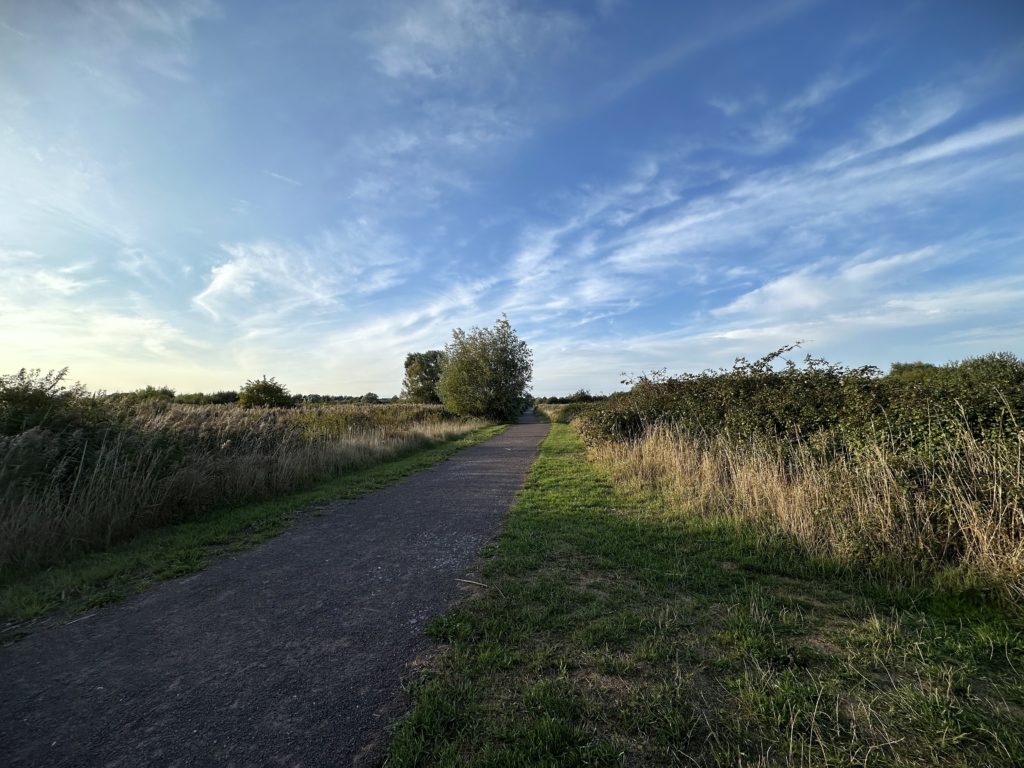
Volunteers working with Somerset Council’s Green Estates Team have recently been trained to survey for one of the UK’s smallest mammals, the harvest mouse, at two popular Bridgwater nature sites.
The Green Estates Team manages both The Meads and Wilstock and Stockmoor Country Park, carrying out habitat management, installing leisure features and monitoring wildlife. With only two rangers responsible for managing these large and important green spaces, volunteers play a vital role in helping to care for the sites.
While practical conservation tasks are often completed alongside the rangers during organised volunteer days, wildlife surveys can require monitoring at specific times of year. Training volunteers to carry out surveys independently allows more information to be collected and helps build a better understanding of local wildlife populations.
On 13 November, a member of the Somerset Mammal Group led a harvest mouse survey training session for volunteers at both sites. Harvest mice are tiny golden-brown mammals with a remarkable prehensile tail, which they can use almost like a fifth limb to help them balance as they climb through vegetation. They weave distinctive spherical nests from blades of grass, carefully shredding and shaping the material with their teeth.
After the breeding season ends in late September, surveyors search grassland habitats for the year’s abandoned nests. Armed with a stick, tape measure and recording sheet, volunteers learn how to spot these well-hidden structures amongst tall grasses, reeds and other vegetation.
Before the training, it was unclear whether harvest mice were present at The Meads, although the site appeared to offer suitable habitat. Volunteers were delighted to discover six harvest mouse nests during the survey, confirming that the species is using the area.
At Wilstock and Stockmoor Country Park, previous surveys by the rangers had already recorded a small number of harvest mouse nests, so volunteers were hopeful of finding more. Their efforts were rewarded with the discovery of three additional nests.
Finding nests at both sites was particularly valuable as it allowed volunteers to see genuine examples in the field. This hands-on experience helped them understand what to look for, including the size, appearance and typical location of nests within different habitats.
Now that volunteers have been trained in harvest mouse surveying techniques, more detailed surveys can be carried out across both sites. The information collected will help build a clearer picture of local harvest mouse populations and ensure future site management continues to support this charming species. The findings will also help rangers adapt habitat management where needed to encourage harvest mouse populations to thrive in the years ahead.