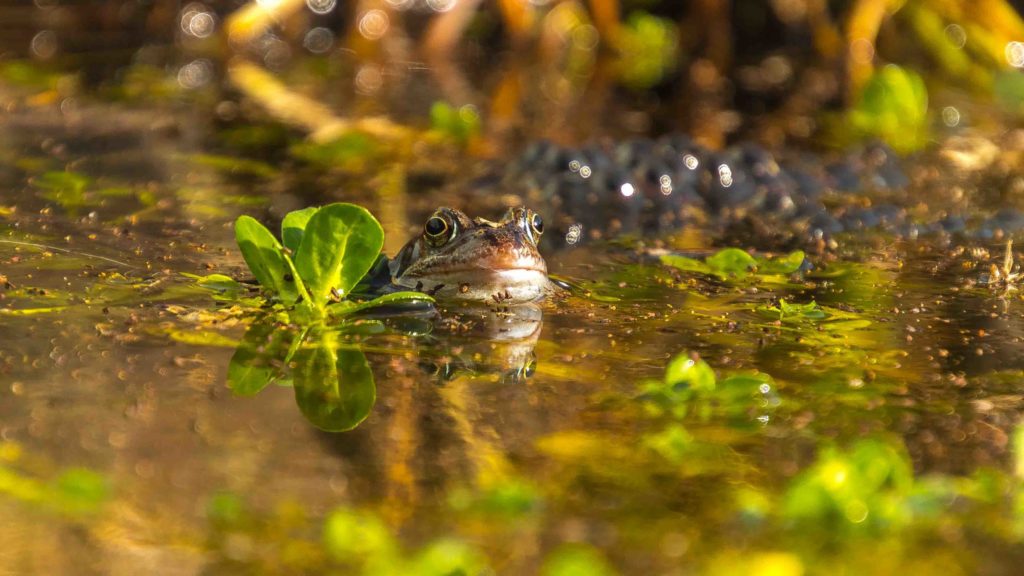
The Green Estates Team have recently carried out surveys for great crested newts at two of the Council’s Local Nature Reserves, Berrow Dunes and Moldram’s Ground, and were thrilled to find the protected species at both sites.
Great crested newts are protected at a European level so the UK’s populations are of international importance. There are 3 native species of newt in the UK and the great crested is by far the largest. Like other amphibians it spends most of its time on land, in woodland, hedgerows and tussocky grassland, feeding on insects and other invertebrates. Come early spring it will make its way to a pond to breed. The males develop a long wavy crest and put on an extravagant courtship display to woo the females. The females will typically lay 200-300 eggs in the water each spring, meticulously wrapping each one in a piece of vegetation for protection.
The ranger team over at Berrow Dunes have been working hard over winter to improve a pond, which had become completely overshaded by willow trees and found it very gratifying to see the great crested newts are using it. After this year’s nesting season works will continue to clear back trees from some of the other ponds on site, this will reduce leaf fall into the water and help to keep the ponds in good condition.
The rangers will also be encouraging visitors to keep their dogs out of the ponds. A serious threat to pond water quality is pollution from common flea and tick treatments. Treatments that contain fiprinol or imidacloprid (most common spot-on treatments) are extremely potent and will kill any insect. They have already been banned in farming but are still used in veterinary medicine. Dog owners are asked to keep their dogs out of ponds and waterways if they have been treated for fleas and ticks in the last 30 days, and to consider chemical-free alternatives instead such as flea-repellent collars. This article from the Rivers Trust gives more details on this issue.